

26 May Overloaded Regulation
Dear Here to Help,
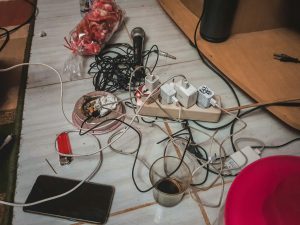
When you talk about public policy, I imagine a power point with a power board attached to it, then double adapter after double adapter plugged into it. It seems like you come along and unravel that into something that works, safely. Is this a good analogy?
Thanks for reaching out. Your analogy made me smile.
Government is like any other organisation. Far from perfect. And as much as everyone knows that housekeeping is important, urgent things take precedence. And everyone always has something “urgent” they want from government.
Yes, legislation does build upon legislation. Impetus for change comes when someone clearly identifies something wrong and communicates it to government.
There are still pieces of legislation that existed in the past and are no longer required. From time to time, government creates a review to identify those old provisions and remove them. A good example is the Board of Taxation’s Report “Identifying Inoperative Provisions of the 1936 and 1997 Income Tax Assessment Acts”. As a result of that Report, many unnecessary pages of legislation were removed.
However, these kinds of reviews don’t happen without prompting. And, as often is the case, it’s people asking for change, complaining about the length of the Tax Acts, that spurred the government into reviewing the Act. In essence, the number of people asking for change created the impetus for change.
So, when you spot the power board loaded with double adapters and want that to change, identify the issue and its consequences and take it to government in a way that they understand. There are loads of tips in my previous columns.
This article comes from my column entitled “Here to Help” in Hunter Local, May 2026. If you have an everyday problem just begging for a simple, real world solution, send it to “Here to Help” and let’s see what we can achieve.
Elaine Abery has a closet full of great ideas and empowering solutions. She’s also the Director of Unravelling Red Tape, a company dedicated to helping everyday people, not-for-profits and companies change the world through improved decision-making and legislation.
Photo by Imam Fadly on Unsplash
Sorry, the comment form is closed at this time.