
09 Sep Government Should…
Dear Here to Help,
I often hear people criticising particular politicians, all politicians and government in general. I would like to better understand what government should actually do and what is acceptable for government to do. After all, I can’t imagine anyone wants government to take over too many things. For one thing, Australians don’t like being told what to do. For another thing, Australians don’t really like paying tax – although we do like our tax refunds.
That’s a great question. One of the key features of Australian democracy is “active and engaged citizens”. This means citizens:
- have a voice in our society
- can make changes in our society
- can participate by getting involved in their communities
- can get involved in the work of Parliament.
Because citizens vote for politicians, politicians are our elected representatives. Voters can hold politicians accountable. Ways of doing this include changing your vote, writing to/talking to politicians, engaging with government bureaucracy, protests, etc. I have written previous articles on how to better engage with government bureaucracy to ensure that your voice is heard in government’s decisions.
The question of what government should and shouldn’t do is really interesting. Government is a part of our society. So are individuals and the community. It makes sense for government to do things that individuals and the community cannot do for themselves.
Abraham Lincoln famously said “the legitimate object of government, is to do for a community of people, whatever they need to have done, but cannot do, at all, or cannot, so well do, for themselves—in their separate, and individual capacities.”
In cultures like Sweden, people are prepared to pay higher taxes for government to do more. In cultures like Australia, we prefer that government doesn’t interfere too much with our lives. Fewer Australians think government is needed in their daily lives. That same study says “Australians think government’s most important role is to provide health care for the sick, control our borders and make industry reduce its environmental impact.”
What does this mean from a practical perspective? Well, simple things that you can do yourself to improve your life are best done by you. For example, take your own bins out and sweep the road in front of your house when rain is expected, so that water goes down the gutters and is taken away by stormwater systems, reducing the risk of your street, car and home flooding. Councils often have bin assistance programmes for people who need assistance.
Community groups, like Landcare, empower people to work together as a group to make their communities better. Landcare is a community-based approach to managing and protecting natural resources. Landcare projects include things like river restoration to improve fish habitat. Here is a good example of how the local community can work together to address its challenges.
More complicated things, like border enforcement and transport infrastructure, are best provided by government. These kinds of things are difficult, or impossible, for an individual or a community group, to provide. They are also unlikely to be provided by a business – how could they charge for this?
I hope this helps you better understand what government does best and helps you to take a more active role in your community, both in practical and political things.
This article comes from my column entitled “Here to Help” in Hunter Local, September 2026. If you have an everyday problem just begging for a simple, real world solution, send it to “Here to Help” and let’s see what we can achieve.
Elaine Abery has a closet full of great ideas and empowering solutions. She’s also the Director of Unravelling Red Tape, a company dedicated to helping everyday people, not-for-profits and companies change the world through improved decision-making and legislation.
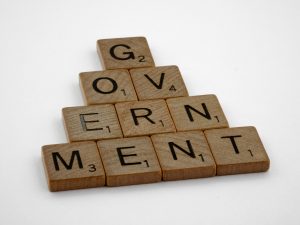
Photo by Brett Jordan on Unsplash
Sorry, the comment form is closed at this time.